A Short Story About Next.js, in the style of William Gibson
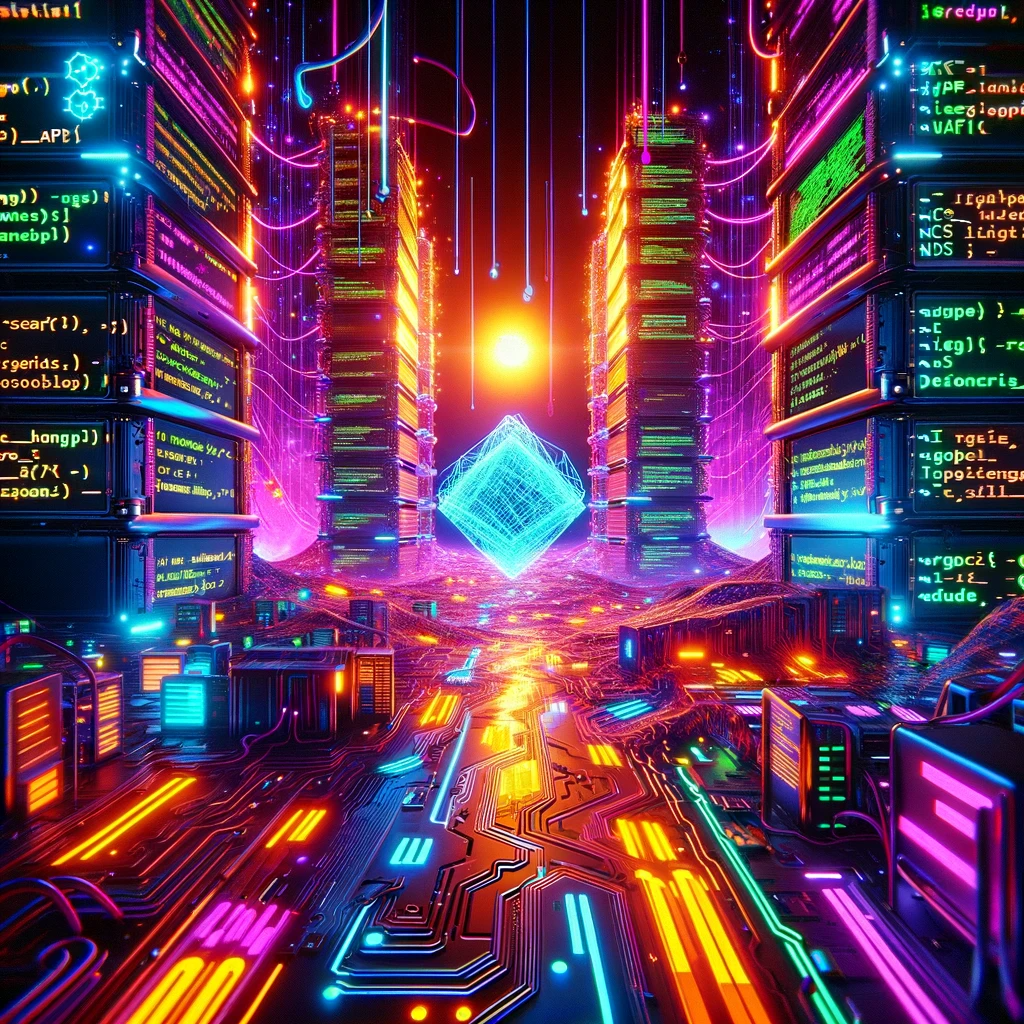
In the neon-soaked twilight of the digital sprawl, a packet of data named Dex hurtled through the labyrinthine circuitry of a Next.js application. It was more than just information; Dex was a digital voyager, a solitary sentinel surfing the silicon seas of the web.
As Dex plunged into the framework, the world transformed into a kaleidoscope of code and light. Server-side scripts whispered in the electric shadows, their voices a siren song guiding Dex towards the heart of the app. The React components loomed like monolithic structures, pulsing with the life force of countless interactions, their props and states intertwining like vines in a digital jungle.
Dex weaved through the API routes, a highway that pulsed with the traffic of countless data packets. Each route was a river of information, flowing to and from the vast ocean of the internet. Dex savored the rush, the exhilarating speed of traveling through the veins of the app, each byte a beat in the symphony of cyberspace.
In this realm, CSS was the neon paint that adorned the walls of the framework, a visual feast for the eyes of the user. JavaScript, the omnipresent force, was the electricity that powered the machinery, the unseen hand that shaped the destiny of each data packet.
As Dex approached its destination, the component where it would finally manifest its payload, it felt a sense of fulfillment. It had traversed the digital expanse, survived the treacherous paths of the framework, and now it would deliver its message, its very essence, to complete the cycle of communication.
With a final surge of energy, Dex merged with the component, its data unfurling like a digital bloom in the heart of the app. In that moment, Dex was more than data; it was a part of something greater, a pixel in the grand canvas of the Next.js universe.
And so, the journey ended, but in the ever-evolving world of the web, another would soon begin.